

How To Draw A Color Wheel
Creating a color wheel is a expert exercise to introduce students to watercolors.
It provides the students with opportunities to acquire:
- the right way to use a paint brush
- how to change the color of the paint on their brushes, and
- how to mix colors.
Supplies
• Watercolor Paper
• Watercolor Paints
• Separate tube of purple pigment (if paint prepare doesn't include regal)
• Paper towels
• Brushes (one per student)
• Styrofoam plates (Palettes)
• Modest paper plates (dessert plates – one per pupil)
• Paper cups – (ane per pupil)
What To Do
one. Provide each pupil with a container with water, paper towel, one brush, palette (Styrofoam plates), and a slice of watercolor newspaper. Considering this project does not involve much water, you don't demand to record down the paper.
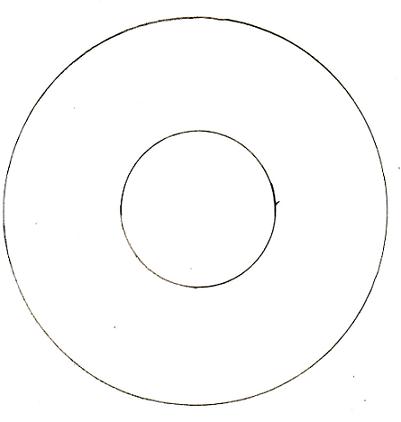
2. On each newspaper, have each student draw a circumvolve by tracing around a small newspaper plate.
3. Now, draw a smaller circle inside the larger circle, trying to center it inside the larger circumvolve. Students can draw the smaller circle freehand, or they can trace around a smaller object, such as a cup. The drawing should await something like this:
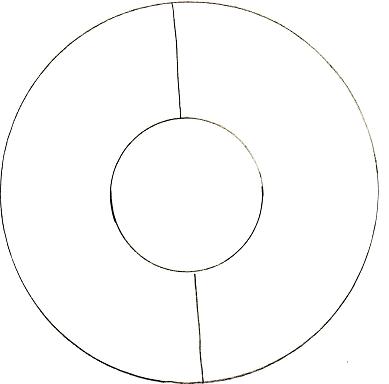
4. Next, take the students draw a line straight across the large circumvolve, skipping over the smaller circle. The line should look like this:
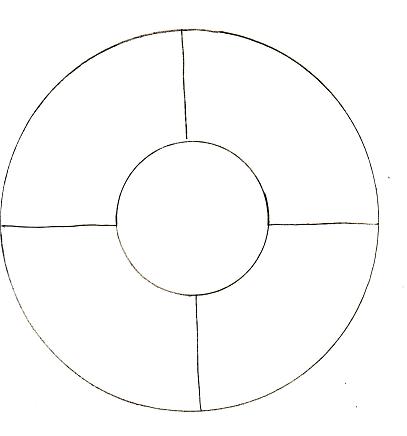
5. Now describe another line directly through the big circle perpendicular to your first line. Now your circles look like this:
six. And then, inside each "quarter" portion of the large circle, describe two more lines, trying to space them evenly (note arrows). Don't worry if they're not exact. Here's what it should look similar now.
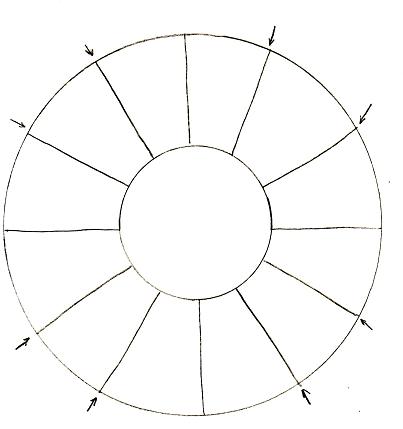
7. Great job! Fourth dimension to pigment!
NOTE: When the students are ready to paint, place the paint on each palette one color at a time. Many learners, especially younger children, tend to jump alee on this project when the paint is readily available.
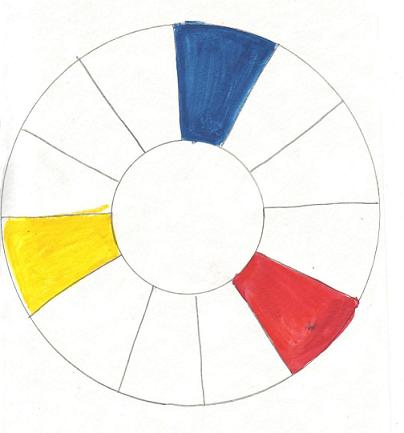
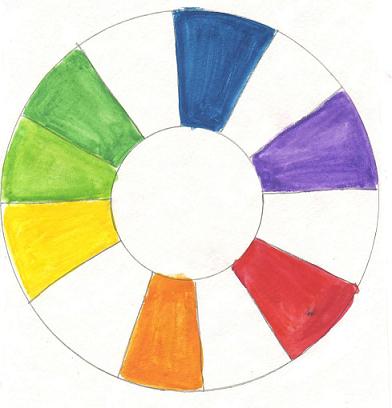
8. Begin with the primary colors. Explicate to the students that at that place are three PRIMARY COLORS which tin be mixed to grade the other colors (Blue, Red, and Xanthous). See if anyone can name a primary color (or two or three).
9. On each palette, place a minor bit of either blue, xanthous, or red. Explicate to the students that a fiddling bit of watercolor paint goes a long way. If they are even so concerned about the express corporeality, permit them know that you lot will give them more if they need it – better to start with as well little than too much. You might allow students (ages 10 and up) to squeeze their own paint from the tubes, but not until they have worked a while with watercolors and sympathize how much they really demand to squeeze out.
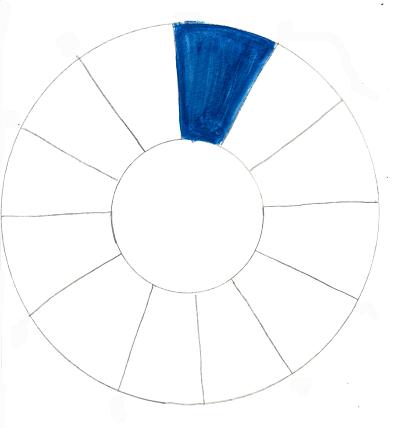
ten. Instruct the students to pick any place on their color cycle and utilize the paint to fill up in the space, leaving the circle in the center white. Notation that you must starting time DIP your brush into the h2o earlier you dip it into the paint. Also notation that the more paint/less water you take, the darker the color will be; the less paint/more than water y'all utilise, the lighter the color volition be. Starting with Blueish in this example, the color wheel should now wait like this:
11. Place the brush back in the h2o and stir information technology around to clean information technology of the paint. Dab it carefully on the paper towel to insure it's clean. If you lot see color come up from the brush to the paper towel, mix the brush effectually in the water again.
12. Choose the side by side primary color the students will use, or have one of the students call information technology out in course. Provide each educatee with a small amount of the color on their palettes. Instruct them to place their finger near the first painted office and count four more. The identify their finger lands is the next place they volition be painting. Have them marker information technology with a small "x" with a pencil earlier moving their fingers off so they don't forget where it was.
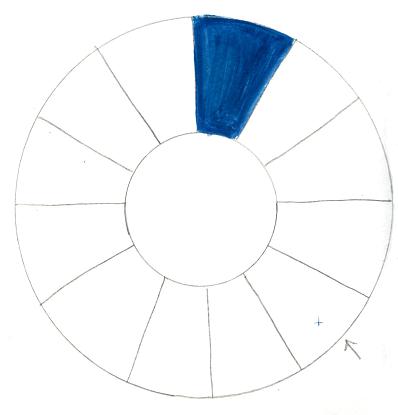
thirteen. Instruct the students to paint the space with the second primary color (in this example, RED) and then make clean their brushes.
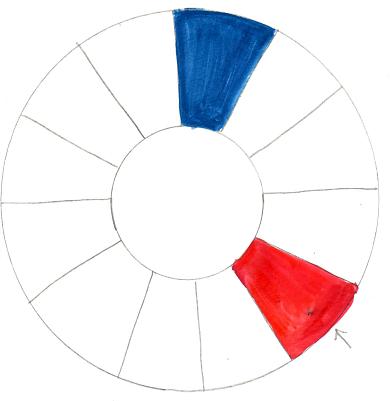
14. Repeat steps 5 and vi for the third primary color (in this example, Yellow).
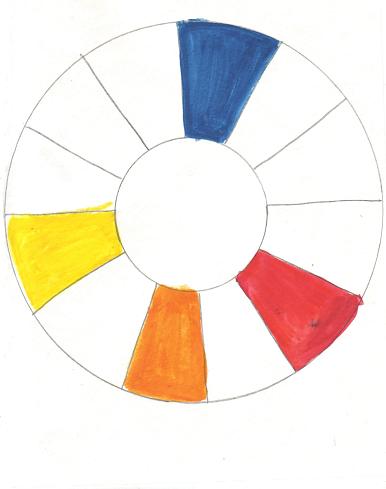
15. Secondary colors: Tell the students what secondary colors are (colors made from combining two master colors: Green, PURPLE, and ORANGE). Instruct the students to find the eye space between Blood-red and Yellow. Ask the students, "What color practise red and xanthous make when you mix them together?" (Answer: Orange). Orange is a secondary colour. Place orange paint on the palettes. Students volition paint the middle space between ruby and yellow.
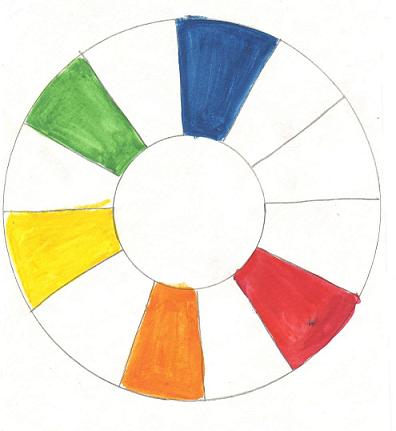
16. At present, find the space between YELLOW and BLUE. What color exercise yellow and blue make when you mix them together? (Light-green) Green is a secondary color. Put green paint on the palette, and have the students paint the middle infinite between yellow and blueish.
17. Next, observe the center space between Blue and Scarlet. What color do blue and cerise make when you mix them together? (Purple). Purple is a secondary colour.
Because pupil sets of watercolors often don't include a tube of purple or violet, purchase an private tube at an art supply store. Yous can accept the students mix up their own purple, simply if they run out before the color bicycle is completed, it'due south frequently difficult to mix upwards the verbal color again.
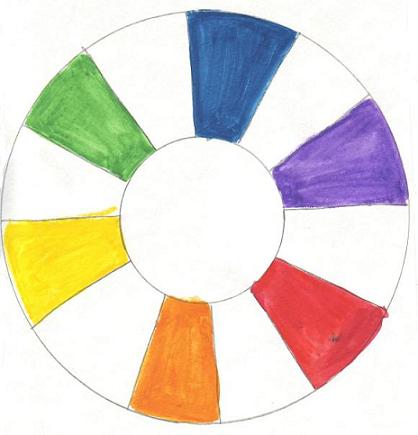
18. The color wheel at present includes the three primary colors and three secondary colors. As the students are painting, remind them to clean their brushes betwixt each color and to brush the brush, non rub or push information technology on the newspaper.
19. MIXING: To finish the color wheel, students will need to learn to mix the colors on their palette. Choose 2 colors with which to brainstorm – it doesn't matter where you get-go on the wheel, merely if you take more than than i pupil, it's easier if they all first with the same colors. After you lot've done two or 3 together, older students will grab on and tin can work at their own pace.
20. Find the space betwixt YELLOW and Light-green. Mix the two colors together in the center of your palette to create a new color. To mix, dip first into one color and put information technology in the center of the palette, wash your brush, so dip into the second color, and mix them together. You need to launder your brush before dipping into the second colour, or the color won't be clean anymore. When yous have finished mixing your new color, paint it in the infinite between the ii colors you lot mixed, Xanthous and GREEN.
21. Repeat step #13 all the way around the colour cycle. Mix GREEN and Bluish, and paint the new color in between; Mix BLUE and Majestic, and paint information technology in the empty space in the middle; Mix Royal and Reddish and paint; Mix Ruby and ORANGE and pigment; Mix Orange and YELLOW and pigment; Mix YELLOW and Green.
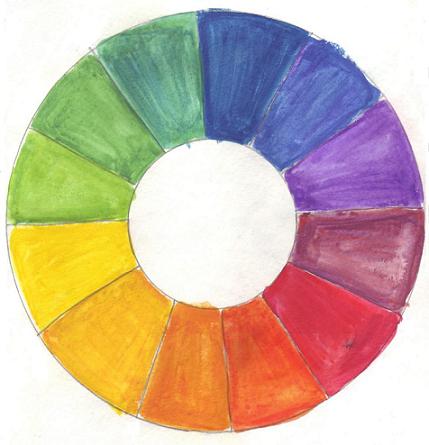
Tip: If the mixed colors don't appear different enough from the original two, add in more of one or the other. You can add a modest amount of paint directly to the space on the color bike and "mix" it there.
That'due south it! The color wheel is complete!
Characteristic epitome by wax115

Source: https://www.samanthasbell.com/creating-color-wheel/
Posted by: cannonittleave.blogspot.com
0 Response to "How To Draw A Color Wheel"
Post a Comment